All Scores

Where we go from here: personal reflections from Just Women’s Sports CEO Haley Rosen

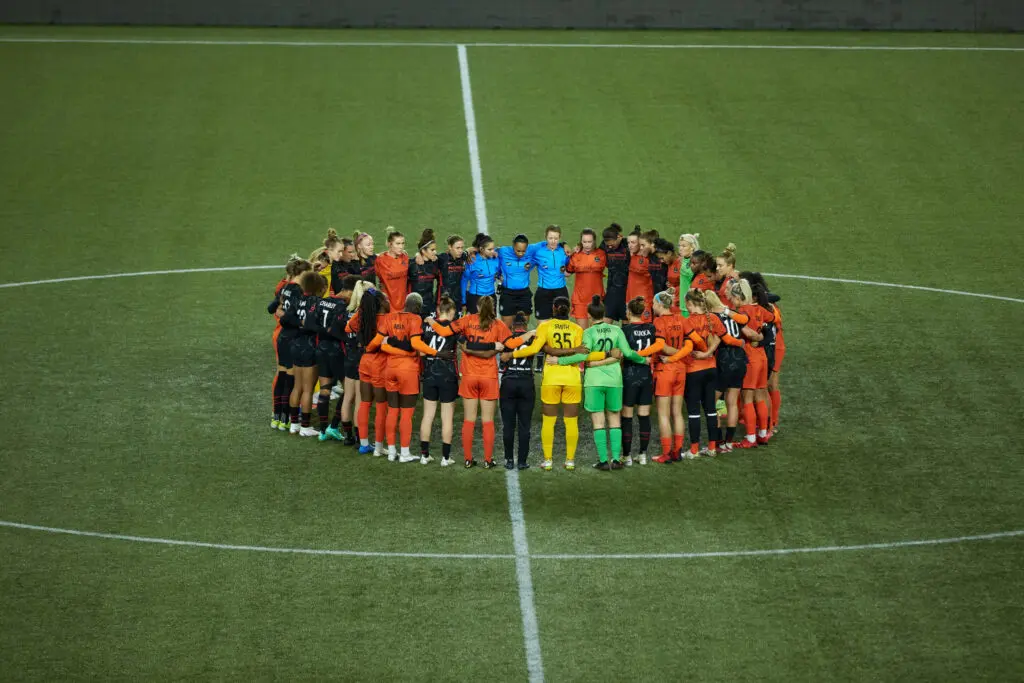
NWSL players huddle at midfield for a moment of solidarity during a game between the Houston Dash and Portland Thorns. (Craig Mitchelldyer/Getty Images)

Of everything I’ve felt since The Athletic first broke the Paul Riley story, the overwhelming feeling has been exhaustion. 

The details of the situation, from Riley’s predatory behavior to the NWSL’s apparent disinterest in investigating the claims, may shock the average fan. But the general pattern is chillingly familiar to those of us who have spent our lives in women’s sports. 

Over the last week, I’ve talked with many of my former teammates and friends within the soccer community. Everyone was shocked but not surprised by what they read. The simple, terrible truth is that we all had seen similar stories play out, of an all-powerful coach whose behavior crossed a line. 

We’ve all grown up watching movies about inspirational coaches and underdog teams overcoming the odds to win some elusive trophy. But anyone who has played a sport at an elite level knows that usually isn’t how it works. The culture of insecurity that Riley created, the artificial environment in which he was a god-like figure, isn’t unique to him. And while the vast majority of coaches are not sexual predators, you’d be shocked by how many of them crave this level of control, how many of them oscillate between excessive anger and praise, leaving their players chasing their approval.

I played club soccer, college soccer, and professional soccer both in America and abroad, and I’ve seen these dynamics at every level. It’s not just abusive men, even if their cases are more numerous, particularly in the NWSL. I’ve been around female coaches who were just as manipulative, and whose comments also veered into uncomfortable personal territory. It’s left me convinced that we simply live in a culture that’s obsessed with women’s bodies and is relentless in subjecting them to judgment and control.

This is only amplified in sports, where coaches have a professional excuse to care about their players’ fitness. Abuse can hide itself more easily in this space, but we all know it’s pervasive across the fabric of society. It’s the same in the workplace, and I know, because I’ve seen it. It’s an older man stopping a meeting to tell you he’d date you if he was younger. It’s investors telling you to do more on-camera stuff because they like the way you look on Zoom. It’s being told right before you’re about to pitch your company alone to a room of men that you look cute that day. 

But again, it’s women too: I can’t tell you how many female VCs have lectured me on how I dress or do my hair. I’ve been told that I look too girly and that I look too masculine. That I need to dress more sporty but also more professionally. That I should and should not wear makeup to meetings. That I have to wear sneakers. That I have to wear heels. 

I don’t want to sound petty. I’m just exhausted. I’m tired of being the only woman in the room, and then hearing men praise themselves because they let a woman in the room. I’m tired of hearing my athlete friends whisper about the shady comments their coaches have made. I’m tired of reading stories like the one in The Athletic

All these things happen because people in power assume no one will speak up. They depend on the inequities which create and reinforce a culture of silence, in which victims of both sexual harassment and offhand comments are forced to choose between their dignity and their dreams. 

As the saying goes: power corrupts, and absolute power corrupts absolutely. In the world of women’s sports, absolute power is often concentrated in a handful of coaches and executives. It’s they who determine whether you make the team, whether you play, whether you get called into the national program, or whether you get cut without a moment’s notice. They are the gatekeepers of each player’s dream.

In some ways, leagues like the NWSL are a beacon of progress and change. They’re a place where talented, outspoken, pink-haired and LGBTQ players take the field, take up space, and make their voices and ambitions heard. They win, lose, compete and make mistakes, and revel in the glory of athletic expression. 

At the same time, they struggle: side jobs are necessary, housing insecurity is rampant, and abusive coaches are tolerated because they could cut you at any minute.

This must change. And it starts with players like Sinead Farrelly and Mana Shim refusing to be silenced, no matter how many times they’re told to go away. Players shouldn’t have to be heroes in order to be protected. But the bravery of these women is changing the game, as is the work of journalists like Meg Linehan, Katie Strang and so many other reporters who are committed to giving light to these stories. 

I started Just Women’s Sports for all the aspirational reasons you can imagine, but also because I was genuinely upset. I was tired of seeing this space being held back by those on the outside who refused to give it a chance, and those on the inside who only used it for power. 

Beneath the weight of this past week, I still haven’t lost hope. As heartbreaking and depressing as everything has been, it’s impossible to ignore the swift and overwhelming response from fellow athletes, journalists and fans. There are too many people speaking up for this to quietly go away. There are too many players taking a stand for the NWSL to go back to business as usual. 

Statements and resignations and investigations are just the start. But replacing the people running the machine won’t fix the machine. Real, systemic change will require everyone in women’s sports to rethink their role. 

Protecting the players has to be the bare minimum. That means establishing protocols and procedures for reporting and investigating abuse. That means requiring teams to be honest about when they’re firing coaches for misconduct. That means delivering a CBA that protects players from being cut without warning or compensation. 

All of that can be done in the immediate future. In the long term, our focus has to be on building the space. Growth is more than an economic necessity — it’s a moral imperative for women’s sports because of the inequities that continue to persist and jeopardize players’ safety and careers. We need more fans, more dollars and more sponsors. We need players who are secure in their livelihoods so that they can speak truth to power and chase their dreams. 

That’s the future we’re trying to help build with Just Women’s Sports. As difficult as this past week has been, it has the chance to be a turning point in women’s sports. 

Now is the time to get to work, with a renewed sense of vision and purpose. 

Haley Rosen is the Founder and CEO of Just Women’s Sports. She is also a former pro soccer player and was an All-Pac-12 midfielder at Stanford. 
USA Hockey Makes History with 2026 Winter Olympics Roster Drop

Young Team USA hockey star Laila Edwards looks down the ice during a 2025 Rivalry Series game.
Laila Edwards will make USA Hockey history at the 2026 Winter Olympics in Milan. (Leila Devlin/Getty Images)

USA Hockey is sending a refreshed lineup to Italy this winter, with Friday's 23-player Olympic roster tapping both newcomers and seasoned veterans looking to avenge 2022's silver-medal finish.

US hockey legend Hilary Knight will play in her fifth — and final — Winter Games next month, with the 36-year-old forward joining fellow veteran mainstays Kendall Coyne Schofield and Lee Stecklein as just 11 players return from the team's Beijing campaign.

After falling just short of gold in Beijing, this year's USA hockey roster balances youth with experience, heading to Milan with a full dozen Olympic debutants, including seven college players — a full four from reigning NCAA champion Wisconsin.

All other 16 athletes currently compete in the PWHL with the pro league sending players from five of its eight teams to join the US squad in February.

The rest of the team focuses on young talent, including University of Wisconsin defender Laila Edwards, who will make history as USA Hockey's first-ever Black woman Olympian when she steps on the ice in Italy.

"It still hasn't really kicked in yet. Getting that call is like a dream come true," said Edwards.

How to watch Team USA hockey in the 2026 Winter Olympics

The USA will open their 2026 Olympic campaign against Czechia at 10:40 AM ET on February 5th before subsequent Group A games against Finland, Switzerland, and defending champions Canada.

The clash will air live on USA Network as part of the full 2026 Olympic Games coverage across NBC platforms.

USA Hockey's 2026 Olympic roster

Goaltenders: Aerin Frankel (Boston Fleet), Ava McNaughton (University of Wisconsin), Gwyneth Philips (Ottawa Charge)

Defenders: Cayla Barnes (Seattle Torrent), Laila Edwards (University of Wisconsin), Rory Guilday (Ottawa Charge), Caroline Harvey (University of Wisconsin), Megan Keller (Boston Fleet), Lee Stecklein (Minnesota Frost), Haley Winn (Boston Fleet)

Forwards: Hannah Bilka (Seattle Torrent), Alex Carpenter (Seattle Torrent), Kendall Coyne Schofield (Minnesota Frost), Britta Curl-Salemme (Minnesota Frost), Joy Dunne (Ohio State University), Taylor Heise (Minnesota Frost), Tessa Janecke (Penn State University), Hilary Knight (Seattle Torrent), Abbey Murphy (University of Minnesota), Kelly Pannek (Minnesota Frost), Hayley Scamurra (Montréal Victoire), Kirsten Simms (University of Wisconsin), Grace Zumwinkle (Minnesota Frost)

U.S. Tennis Star Coco Gauff Ruffles Feathers as 2026 United Cup Continues

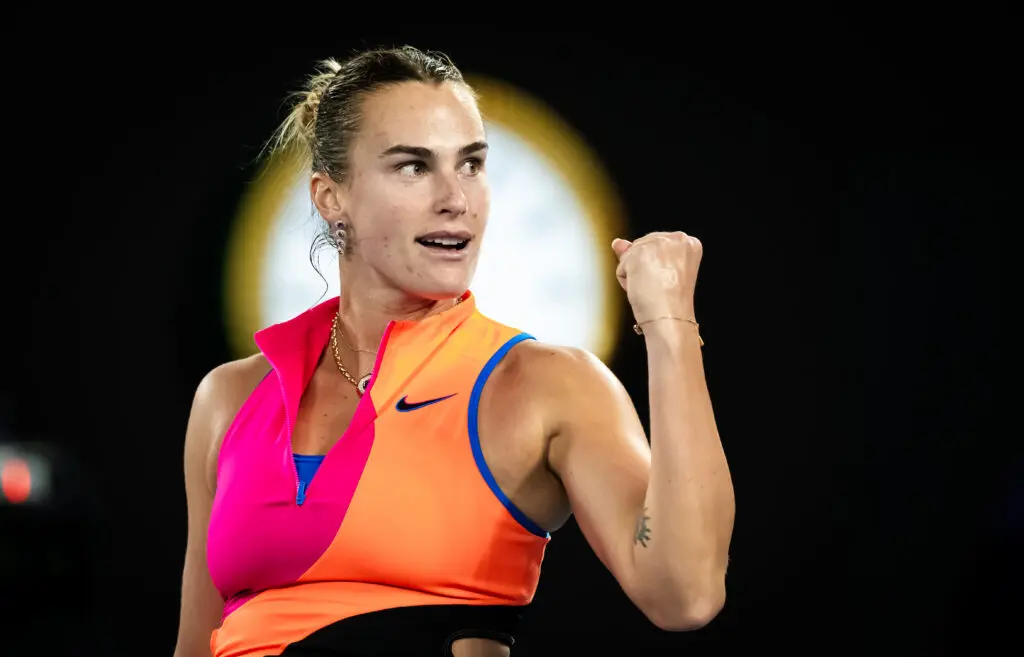
Team USA star Coco Gauff celebrates a point during a 2026 United Cup match.
Team USA star Coco Gauff fell in singles at the 2026 United Cup, but bounced back in mixed doubles. (Janelle St Pierre/Getty Images)

Tennis's biggest names have hit highs and lows down under over the weekend, with stars like Coco Gauff seeing mixed results at the 2026 United Cup as the annual Australian Open team tune-up tournament heads into its knockout rounds.

World No. 4 Coco Gauff and the reigning champion Team USA are through to the quarterfinals, joined by top WTA competitor and No. 11 Belinda Bencic of Team Switzerland.

Argentina, Australia, Belgium, Czechia, and Greece also punched their tickets to the knockouts, with Tuesday night's final group-stage bout deciding whether No. 2 Iga Świątek and Team Poland or Team Germany will claim the final spot in the quarterfinals.

Thus far in the team competition, however, Gauff has experienced a particularly up-and-down tournament, suffering her first-ever United Cup singles defeat on Monday against No. 42 Jessica Bouzas Maneiro of Spain after causing a stir with her postmatch comments.

"I feel like we're definitely, in tennis, the worst," she told reporters before the singles showdown. "I've always said I wish our country in other places would show up throughout the world as we see smaller countries support."

After taking some heat, the 21-year-old later clarified her position on social media, writing "Trust me I understand the financial aspect of things and know tennis is not accessible for everyone, it was more of a comment for those who are already attending and how I wish they were as passionate as those from other countries."

How to watch Gauff and Team USA at the 2026 United Cup

Gauff will look to return to form against No. 51 Maria Sakkari when Team USA kicks off the 2026 United Cup quarterfinals against Team Greece at 9 PM ET on Tuesday, airing live on the Tennis Channel.

Unrivaled President Says ‘Door is Open’ For Future Partnership with WNBA

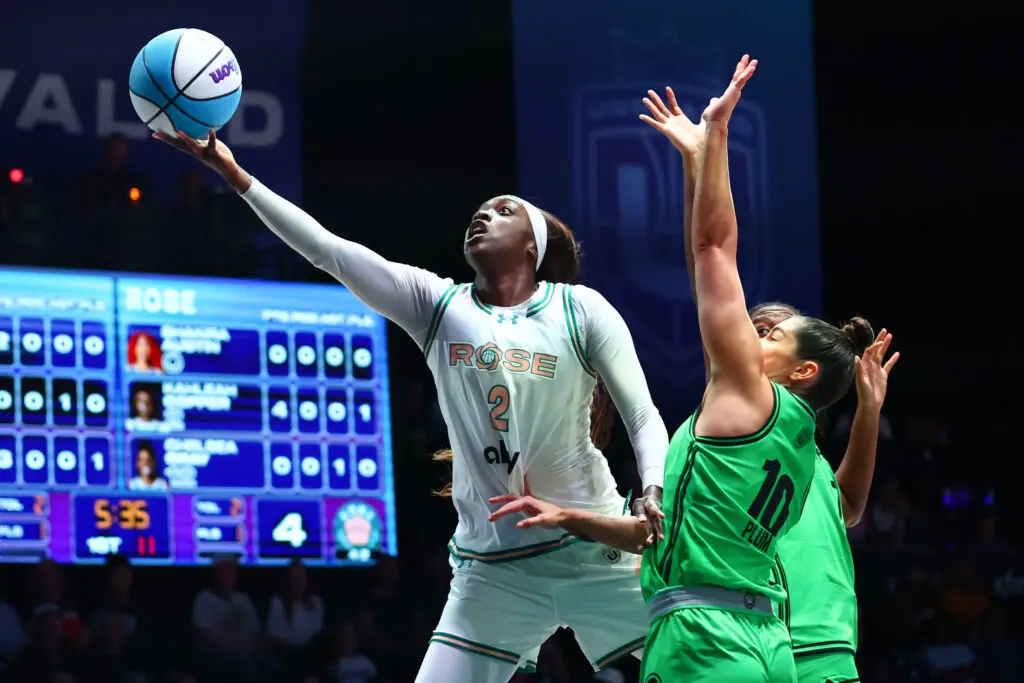
An Unrivaled basketball rests on the court.
Unrivaled says they're committed to "growing the ecosystem, whichever way that looks like." (Carmen Mandato/Getty Images)

Unrivaled leadership is back in the hot seat, telling reporters at Monday's Season 2 tip-off that the offseason 3x3 league is open to whatever the future might bring — even if it's a formal partnership with the WNBA.

"We're not in constant dialogue about that," Unrivaled president Alex Bazzell said from Miami. "But as I've made very clear, we are open to growing the ecosystem, whichever way that looks like."

"Nothing is on the table or off the table," he continued. "I'm not going to speculate what could happen down the road, but everyone knows our door is always open."

As reported prior to the 3×3 upstart's inaugural 2025 season, Unrivaled co-founders Breanna Stewart and Napheesa Collier had approached the WNBA about a potential equity stake — in part to further illustrate that the new venture is complementary, rather than in competition with, the WNBA — but league leadership turning down the offer, citing a possible rules violation.

Questions have since come up about Unrivaled becoming a prioritization issue for players under the WNBA's still-developing CBA, but Bazzell underlined the league's benefits as being supplemental, rather than in direct conflict with the 5x5 league.

"As long as you can look at the space through an innovative lens, anything is doable," he said. "Anything is possible."

Upsets Shake Up 1st AP Top 25 Women’s College Basketball Poll of 2026

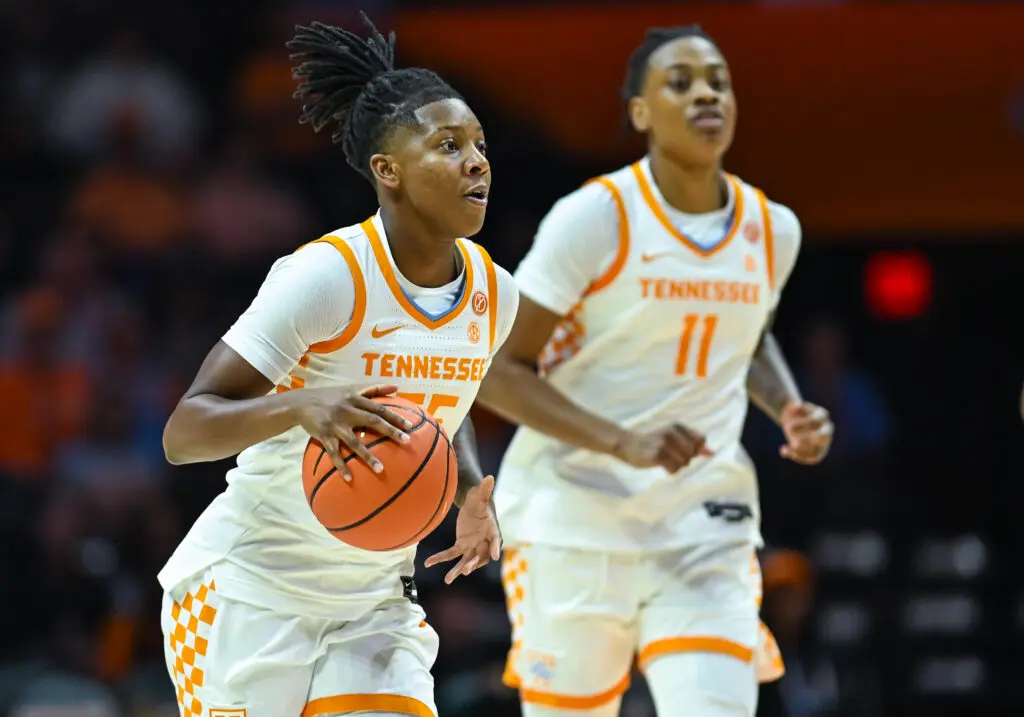
Vanderbilt teammates Sacha Washington, Aiyana Mitchell, and Mikayla Blakes celebrate a play during a 2025/26 NCAA basketball game.
No. 7 Vanderbilt launched into the AP Top 10 after top-ranked wins. (Carly Mackler/Getty Image)

In the first AP women's basketball poll in two weeks, Monday's new rankings reflected last week's conference upsets, sending four Top 10 teams skidding down the table while other contenders broke through.

Now-No. 12 LSU suffered the biggest drop, falling seven spots after consecutive losses to No. 6 Kentucky and No. 7 Vanderbilt.

The Wildcats and the still-undefeated Commodores experienced the opposite effect, jumping five spots each after their ranked victories, with No. 5 Oklahoma and No. 10 Louisville making similar three-spot advances.

The biggest winner of this week's AP poll, however, sits just outside the Top 10, as No. 15 Michigan State leapt nine spots, defeating unranked Indiana, Illinois, and Rutgers after closing out nonconference play with a 66-49 upset win over now-No. 18 Ole Miss.

Chasing the Spartans' rise up the ranks are No. 16 Baylor, who earned a six-spot jump after handing No. 11 Iowa State their first loss of the season on Sunday, and No. 17 Texas Tech, whose unbeaten status saw the Red Raiders claim a four-spot boost.

Meanwhile, a struggling Notre Dame dropped out of the Top 25 entirely after losses to unranked Georgia Tech and Duke, snapping an 85-week AP Poll appearance streak — the third-longest in women's basketball history.

Additionally, the Top 4 remained unchanged after perfect results from No. 1 UConn, No. 2 Texas, No. 3 South Carolina, and No. 4 UCLA — who dominated their crosstown rival No. 21 USC 80-46 on Saturday.

How to watch Top 25 NCAA basketball this week

Top 25 teams will continue their conference slates this week, starting with USC taking on unranked Oregon on Tuesday.

The Trojans and visiting Ducks will tip off live at 10 PM ET on Fox Sports.

2025/26 AP Top 25 Women's College Basketball Poll: Week 9

1. UConn (15-0, Big East)
2. Texas (17-0, SEC)
3. South Carolina (15-1, SEC)
4. UCLA (14-1, Big Ten)
5. Oklahoma (14-1, SEC)
6. Kentucky (15-1, SEC)
7. Vanderbilt (15-0, SEC)
8. Maryland (15-1, Big Ten)
9. Michigan (12-2, Big Ten)
10. Louisville (14-3, ACC)
11. Iowa State (14-1, Big 12)
12. LSU (14-2, SEC)
13. TCU (14-1, Big 12)
14. Iowa (13-2, Big Ten)
15. Michigan State (14-1, Big Ten)
16. Baylor (13-3, Big 12)
17. Texas Tech (16-0, Big 12)
18. Ole Miss (14-3, SEC)
19. Ohio State (13-2, Big Ten)
20. Tennessee (10-3, SEC)
21. USC (10-4, Big Ten)
22. UNC (13-4, ACC)
23. Washington (12-2, Big Ten)
24. Princeton (13-1, Ivy)
25. Nebraska (13-2, Big Ten)