NBC Olympics figure skating coverage at Milano-Cortina 2026 showcased a cultural shift, as competitors displayed friendship and support rather than the icy rivalries that once defined women's figure skating.
The most visible example came from Team USA's self-proclaimed Blade Angels, as NBC showed Amber Glenn, Alysa Liu, and Isabeau Levito celebrating together throughout the Games. While Liu won gold, all three skaters expressed genuine affection for each other.
"I just adore these two ladies," Glenn told reporters in January. "I've seen them grow up since being little children, and to see them here as incredible women is probably one of the most wonderful experiences I've had in skating."
After topping the podium in Milan, Liu also praised her US teammates.
"I love Isabeau's wittiness. Truly, she's the funniest person I've ever met," Liu said. "And then Amber, she has so much love, and I love that."
Former Olympian Gracie Gold described the isolation women's figure skaters often experienced during her competitive years. "I still love skating, but it was how I coped with everything around it, and some parts of the culture and some people in the sport that I think need to change," she said in 2024.
26-year-old Glenn also remembers that intensity. She said younger women like Liu, 20, and Levito, 18, don't understand why NBC reporters keep calling their Olympic friendship unusual.
"They don't quite know what the atmosphere might have been like before," she explained. "Not that it was all bad, but there was definitely some intensity."
Figure Skaters Showcase Support as NBC Olympics Cameras Watch On
Japanese bronze medalist Ami Nakai exemplified this shift when she celebrated with Liu as the judges read the final scores, with NBC Olympics cameras capturing Liu and Nakai hugging and jumping up and down as Nakai's coach wiped away tears.
"I honestly didn't think that I was going to win a medal, so when I found that out I was overjoyed," Nakai later reflected via a translator. "Alysa Liu actually came up to me and said, 'Congratulations, it's amazing that you won a medal on your first Olympics.'"
"She's just so cute. She's so happy on the ice," Liu said. "I was like, 'I gotta celebrate like she did.'"
US Olympic figure skating champion Alysa Liu and her father Arthur Liu were among those targeted in a spying operation ordered by the Chinese government ahead of the Beijing Olympics, according to the Justice Department.
In March 2022, Arthur Liu told The Associated Press that the FBI had contacted him the previous October, warning him about a Chinese spying scheme as his daughter prepared for her debut Olympics. Arthur subsequently chose not to tell Alysa about the situation, hoping to avoid throwing the then-16-year-old off her game.
"We believed Alysa had a very good chance of making the Olympic team and truly were very scared," the elder Liu said at the time.
The Justice Department later announced charges against five men accused of acting on behalf of the Chinese government, including stalking and harassing Chinese dissidents in the US. A former political refugee, Arthur immigrated to California after the 1989 Tiananmen Square massacre.
Arthur Liu Took a Stand Against "Chinese Bullying"
By allowing his daughter to compete in Beijing, Arthur said his family took a stand against the Chinese government's bullying.
"This is her moment. This is her once-in-a-lifetime opportunity to compete at the Olympic Games," Liu said at the time. "I'm not going to let them stop her from going, and I'll do whatever I can to make sure she's safe."
According to Arthur, Alysa received added protection in Beijing. She had at least two people escorting her at all times.
"They are probably just trying to intimidate us, to threaten us not to say anything, to cause trouble and say anything political or related to human rights violations in China," he continued. "I had concerns about her safety. The US government did a good job protecting her."
The USOPC supported Liu's efforts, stating that the safety and security of US athletes remained its "number one priority." Nonetheless, Alysa told her father that a stranger approached her at an Olympic cafeteria in Beijing, later following her and asking her to come back to his apartment.
"I've kind of accepted my life to be like this because of what I chose to do in 1989, to speak up against the government," Arthur said.
"I know the Chinese government will extend their long hands into any corner in the world. I'm going to continue to enjoy life and live life as I want to live. I'm not going to let this push me down, and I'm not going to let them succeed."
Alysa Liu Stages Olympic Comeback After Brief Retirement
After finishing seventh at the 2022 Beijing Olympics, Alysa briefly retired from competitive skating.
"Heyyyyy so I'm here to announce that I am retiring from skating," she wrote in a since-deleted social media post. "I started skating when I was 5 so that's about 11 years on the ice and it's been an insane 11 years. A lot of good and a lot of bad but (you know) that's just how it is."
However, the younger Liu staged a remarkable comeback in 2024, rediscovering her love for the sport. She went on to win the 2025 World Championships in Boston, before capturing Olympic gold and ending a 24-year drought for US women's figure skating.
Alysa's triumphant return to the ice four years later proved her father's defiance was not in vain. Now a student-athlete at UCLA, the 20-year-old champion became the first US women's figure skater to win Olympic gold since Sarah Hughes in 2002.
"I'm so intentional now," Liu said this week. "I'm so grounded. Everything I do has a reason for why I do it."
As one of the most successful nations in Olympic figure skating history, Team USA's women's figure skaters continue to make a lasting impact on the sport across all levels of competition. Starting in the 1950s, the US has produced seven women's singles Olympic gold medalists — and several athletes who shaped the sport without ever winning gold.
From mid-century pioneers like Tenley Albright to Gen Z heroes like Amber Glenn, these are the 10 most important Olympic women's figure skaters in Team USA history.
Team USA's Top Women's Figure Skaters
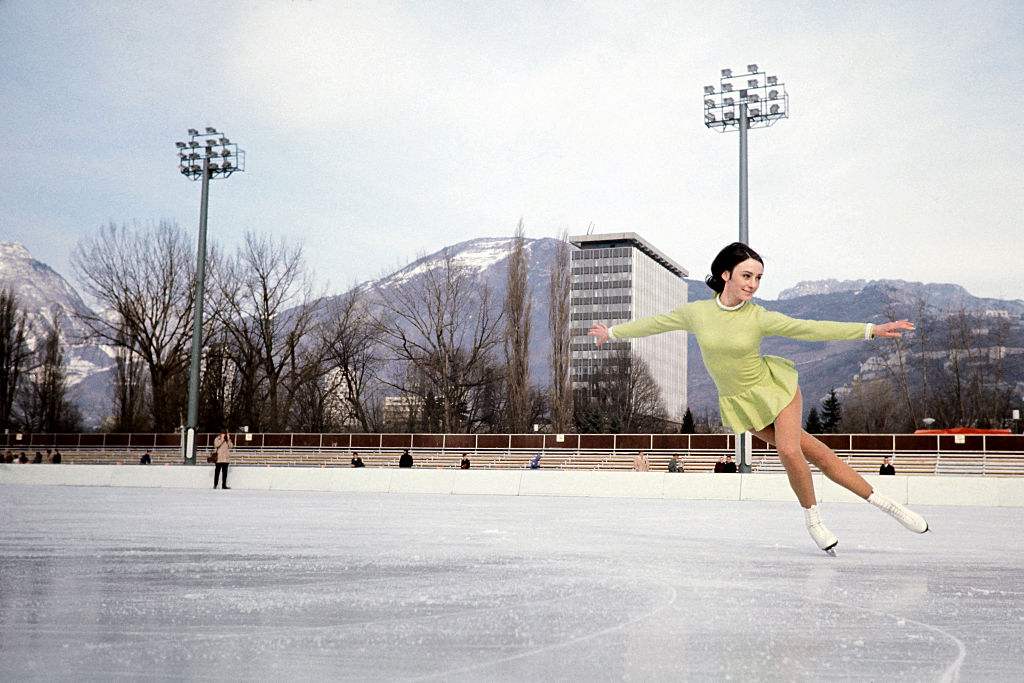
Tenley Albright
Tenley Albright contracted polio at age 11, subsequently defying the odds by winning Olympic silver at the 1952 Oslo Games. Four years later in Cortina, she sliced her ankle to the bone in practice days before competition but skated through the injury, becoming the first US women's figure skater to win Olympic gold. Albright also captured figure skating's first-ever triple crown, winning the World, North American, and United States ladies titles in a single year.
Going on to become the first woman to serve as a United States Olympic Committee officer, Dr. Albright was later named one of Sports Illustrated's 100 Greatest Female Athletes.
Carol Heiss
At just 15, Carol Heiss placed second behind trailblazer Tenley Albright at the 1955 World Championships. However, she went on to flip the script, taking the Worlds title from 1956 until 1960.
She similarly won silver behind Albright at the 1956 Cortina Games, before returning to win gold at the 1960 Squaw Valley Games. Though she retired shortly after winning gold, Heiss's international run of dominance cemented her as one of the most consistent performers in the sport's history.
Peggy Fleming
When a plane crash killed the entire US figure skating delegation en route to the 1961 World Championships, the athletes that remained were forced to rebuild the sport from scratch. And 19-year-old Peggy Fleming became the face of Team USA's rebuilding.
Flemming won gold at the 1968 Winter Games in Grenoble — the first Olympics broadcast live and in color to a worldwide audience. Capturing both the public's eye and the sport's top honor, Flemming's feat restored the U.S. program and turned women's figure skating into a top spectator event.
Dorothy Hamill
When Dorothy Hamill won gold at the 1976 Innsbruck Games, it brought something new to the sport: a skater the everyday fan could root for. Her signature wedge haircut became one of the most imitated styles of the decade. She also introduced the Hamill Camel — a spin variation that became part of skating's technical vocabulary — and sparked a youth figure skating boom across the entire United States.
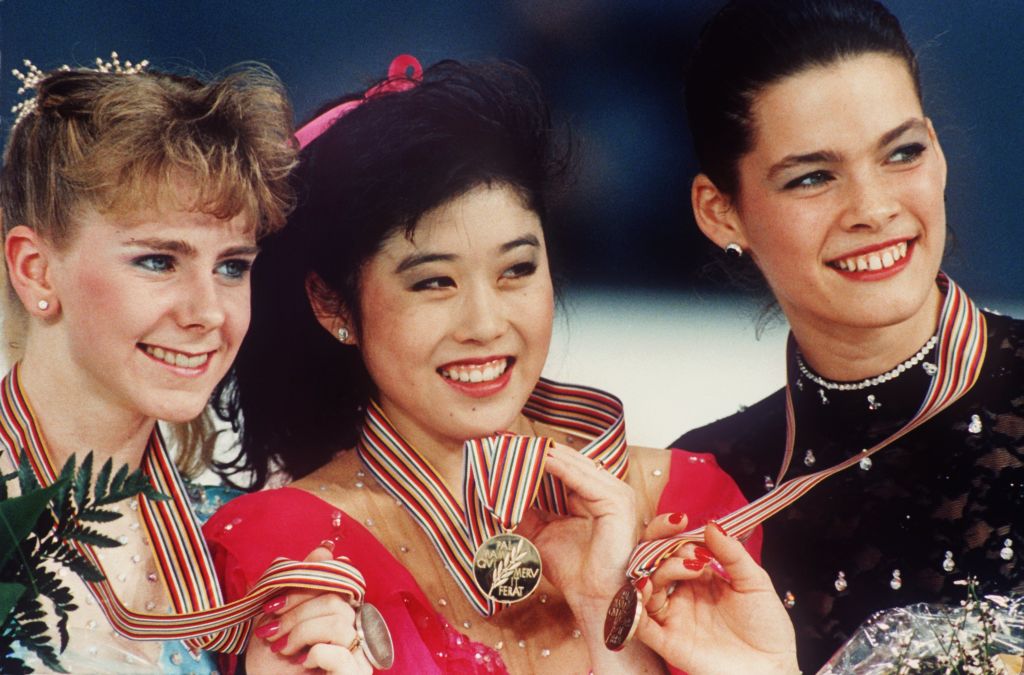
Kristi Yamaguchi
A mid-90s household name, Kristi Yamaguchi took gold at the 1992 Winter Olympics, making her the first Asian-American woman to win an Olympic figure skating medal. The cultural milestone subsequently opened doors for the next generation.
That 1992 win saw Yamaguchi overcome one of the deepest fields in Olympic history, beating a lineup that included the first and second women to ever land triple axels in competition: Japan's Midori Ito and fellow US star Tonya Harding. The 21-year-old was reportedly inspired by her childhood hero, as legendary figure skater Dorothy Hamill approached her backstage to wish her luck — moments before Yamaguchi pulled of her gold medal-winning run.
Nancy Kerrigan
Nancy Kerrigan overcame extraordinary adversity to win silver at the 1994 Lillehammer Olympics — just weeks after being attacked at the US Figure Skating Championships. While her bronze medal at the 1992 Albertville Games established her as an elite figure skating competitor, her 1994 comeback defined her legacy on and off the ice.
Kerrigan's grace under pressure and technical precision — particularly her signature spiral sequences — inspired millions and propelled figure skating into mainstream consciousness during one of the sport's most scrutinized and memorable eras.
Michelle Kwan
Michelle Kwan stands as the most decorated figure skater in US history. Despite never winning Olympic gold, Kwan captured silver at the 1998 Nagano Games and bronze in 2002, all the while revolutionizing creative expression in women's figure skating.
Her five world championship titles and nine US national championships represent unparalleled consistency and dominance across more than a decade of elite competition. Kwan's lyrical style and emotional depth transformed artistry expectations, influencing generations of skaters who followed.
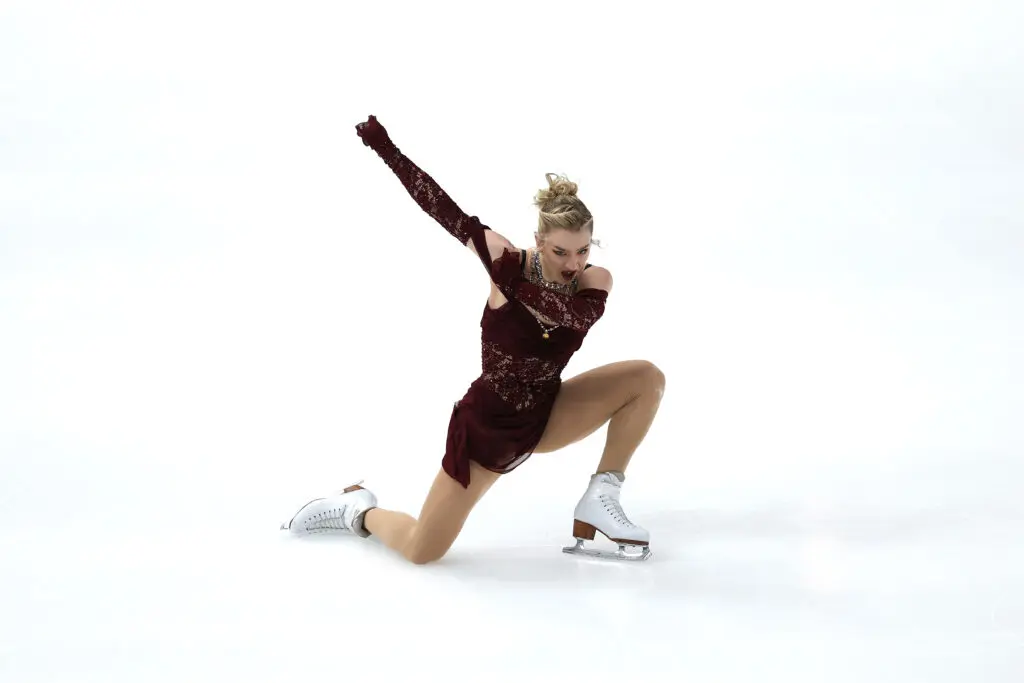
Tara Lipinski
At just 15, Tara Lipinski etched her name in Olympic figure skating history by becoming the youngest individual gold medalist at any Winter Olympics. Her groundbreaking triple loop-triple loop combination in the 1998 Nagano Games pushed the limits of the sport's physical boundaries. Lipinski's victory over favorite Michelle Kwan marked a generational shift in women's figure skating, as the field turned toward younger, more technically ambitious athletes. Currently a commentator for the 2026 Winter Olympics, Lipinski also remains the youngest world champion in history, winning the 1997 title at age 14.
Sarah Hughes
Sarah Hughes claimed gold at the 2002 Salt Lake City Olympics with a stunning free skate performance, rallying from fourth place after the short program to become the third US women's figure skater to ever win Olympic gold.
Hughes's calm under pressure — landing two triple-triple combinations — proved that artistic form and technical excellence could coexist at the highest level. And her upset victory over favorites Michelle Kwan and Irina Slutskaya continues to rank among the sport's most memorable Olympic moments.
Amber Glenn
The first athlete to win three consecutive US national championships since Michelle Kwan, Amber Glenn represents figure skating's modern era. The 26-year-old Texas native also became the oldest US women's singles competitor in 98 years when she took the ice at this year's Winter Games.
Known for her athletic prowess — and consistently landing triple Axels in international competition — Glenn has emerged as an important voice for inclusivity as an openly queer athlete advocating for greater representation and equity in the sport. Furthermore, Glenn's perseverance through years of near-misses before finally capturing her first national title in 2024 epitomizes her dedication to the future of figure skating.
Every Wednesday in February, JWS celebrates Black History Month by spotlighting a prominent Black figure in women's sports history.
Mabel Fairbanks forever shaped the world of figure skating, paving the way for Black athletes despite never competing at the professional level herself.
Born in 1915 in Jacksonville, Florida, Fairbanks moved to New York as a teenager. She soon bought used skates at a pawn shop, stuffing them with cotton and teaching herself to skate in Central Park.
However, discriminatory Jim Crow-era laws barred Fairbanks from both the Olympic trials and national figure skating competitions during the 1930s. Despite rinks denying her entry because of her race, she persisted at the sport, eventually catching the eye of legendary coach and nine-time US champion Maribel Vinson Owen.
“To be the best I had to be as good as the kids who were on that [competitive] ice skating,” Fairbanks said in 1999 oral history. “I didn’t think that I would be able to compete at that time, I just wanted to be as good as they were, or even better.”
Owen helped Fairbanks refine her technique, leading her to book ice shows throughout New York during the 1940s. She appeared at venues including the Apollo Theater and the Brooklyn Academy of Music, before moving to Los Angeles and finding success with local and touring ice dance productions.
Mabel Fairbanks Shines as Olympic Figure Skating Coach
After retiring in 1948, Fairbanks transitioned to coaching and transformed the sport. Her students included Olympic and World Champions Tai Babilonia, Debi Thomas, Scott Hamilton, and Kristi Yamaguchi.
In 1997, Fairbanks made history as the first African American inducted into the US Figure Skating Hall of Fame. She received a posthumous induction into the International Women's Sports Hall of Fame in October 2001.
Fairbanks died September 29th, 2001 in Burbank, California at age 85. Her legacy lives on through the champions she coached and their lasting impact on the sport of figure skating.
Alysa Liu delivered a stellar performance on Tuesday to lead Team USA in the women's figure skating short program. The reigning world champion scored a season-best 76.59 to finish third.
She trails Japan's Ami Nakai (78.71) and Kaori Sakamoto (77.23) heading into Thursday's free skate.
20-year-old Liu landed a difficult triple lutz-triple loop combination, a sequence no other athlete attempted. She set her routine to Laufey's "Promise," earning a standing ovation from the crowd in Milan.
@nbcolympics Alysa Liu was all smiles after her skate! 😀 #WinterOlympics ♬ original sound - NBC Olympics & Paralympics
"I felt super grounded, and I connected with my program on another level compared to the rest of the season," Liu said afterward. "My goal is just to do my programs and share my story."
Unfortunately, the night brought heartbreak for US teammate Amber Glenn. The three-time US champion finished 13th with 67.39 points after bailing out of a triple loop. The jump became an invalid element, resulting in no points awarded.
However, Glenn did successfully land a triple axel earlier in her routine, joining Nakai were the only two skaters to attempt the difficult 3.5-revolution jump. But the missed triple loop cost her seven to eight points, with Glenn ultimately exiting in tears.
"She's gone through so much, and she works so freaking hard," Liu said of her fellow Blade Angel. "I just want her to be happy, that's genuinely all I want."
Team USA's Isabeau Levito finished eighth in her Olympic debut with 70.85 points, with all three US skaters qualifying for Thursday's competition.
The United States is hunting its first women's figure skating medal since Sasha Cohen won silver in 2006, marking a 20-year drought. The last US women's figure skater to win gold was Sarah Hughes in 2002.
The International Skating Union issued a pre-emptive statement on Monday, after controversial Russian figure skating coach Eteri Tutberidze appeared at a Milan practice with neutral Olympic athlete Adeliia Petrosian.
Petrosian, 18, is competing as a neutral athlete at the 2026 Winter Games. Russia's invasion of Ukraine prompted the country's exclusion from international sport, with the skater subsequently participating in just one senior event outside Russia in the past two years: September's Olympic qualifiers.
Tutberidze's coaching methods have drawn scrutiny since the 2022 Beijing Olympics, after her former student Kamila Valieva became embroiled in a doping scandal. However, WADA did not find Tutberidze guilty of any offense related to Valieva's positive test. She never faced sanctions.
Tutberidze currently holds Olympic accreditation through Georgia, coaching that country's European men's champion Nika Egadze. The ISU statement clarified the organization had formed "a robust series of protocols for the screening of proposed athletes and their support personnel." The ISU also noted that "the Olympic Winter Games and related rules are the responsibility of the IOC."
Nevertheless, World Anti-Doping Agency President Witold Bańka expressed his discomfort. He admitted he did not "feel comfortable with her presence at the Milano-Cortina Games."
On Monday, Adeliia Petrosian told reporters she felt "excellentt" after her session with Tutberidze. She skated for half an hour at the practice rink next ahead of Tuesday's women's short program qualifiers.
A victory in Milan would make Adeliia Petrosian the fourth consecutive Olympic women's figure skating champion from Russia or the Russian system. Previous champions include Adelina Sotnikova (2014), Alina Zagitova (2018), and Anna Shcherbakova (2022).
Adeliia Petrosian has previously landed quadruple jumps at Russian national competitoins. However, none of the other skaters at the Milano-Cortina Games are able to match that high-scoring element.
What's Next for Olympic Figure Skater Adeliia Petrosian
Following Tuesday's qualifiers, Petrosian will next compete in the women's figure skating medal event on Thursday at 1 PM ET, live across NBC and Peacock.
Petrosian will skate to music by Michael Jackson in the short program. She faces a competitive field that includes Team USA trio Amber Glenn, Alysa Liu, and Isabeau Levito. Japanese frontrunners Kaori Sakamoto and Ami Nakai also present strong challenges.
Figure skating took center stage on Friday morning, with defending champion Team USA securing a narrow lead on the first day of the must-watch Winter Olympics event's three-day team competition.
The team event showcases 10 nations competing across women's and men's singles, pairs, and dance categories, with each performance earning team points based on leaderboard positions.
Reigning world champion Alysa Liu skated the women's short program for Team USA, with the 20-year-old scoring a 74.90 to finish second to Japanese favorite Kaori Sakamoto's 78.88 tally.
Japan also took first in the pair's skating short program, with Team USA's Ellie Kam and Danny O'Shea coming in fifth, but it was US duo Madison Chock and Evan Bates who topped the morning's rhythm dance event with a season-high score of 91.06.
The US performances ultimately secured 25 team points, earning the nation a day-one lead with Japan (23 points) and Italy (22 points) close behind.
Despite earning points for their countries on Friday, this weekend could see several roster shifts as the field narrows to the Top 5 nations on Saturday, with each team allowed to swap out skaters in up to two categories prior to the free dance and free skates.
For Team USA, rumors have three-time national champion Amber Glenn taking over the women's singles spot in Sunday's free skate, though the swap is not officially confirmed.
"We all signed a NDA for that!" joked Liu when asked about the US roster plan in the lead-up to the team event.
How to watch Team USA figure skater Alysa Liu at the 2026 Winter Olympics
Team USA currently sits two points ahead of Japan heading into the second day of team competition. Five nations remain in contention to advance to the final round, with Italy, Georgia, and Canada also in the running.
Liu might return to the ice on Sunday, when the figure skating team event concludes with women's free skate at 2:45 PM ET, live across NBC and Peacock.
Three-time world champion Kaori Sakamoto delivered a commanding performance in this morning's figure skating team event, scoring 78.88 points to lift Japan to second place at the Milano-Cortina Winter Olympics.
The 25-year-old finished first in the women's short program at Milano Ice Skating Arena, edging out reigning world champion Alysa Liu of Team USA by nearly four points.
Sakamoto skated near-flawlessly despite an edge error on her opening triple Lutz, going on to earn top levels on all her spins and footwork sequences. The two-time Olympic medalist expressed relief after Friday's performance, acknowledging her nerves while maintaining composure.
The Milano-Cortina Games mark Kaori Sakamoto's final Olympic appearance. After narrowly missing a fourth consecutive world championship win in June, she announced plans to retire from competitive figure skating following this season. With three world titles, she's currently tied with Japanese legend Asada Mao for the winningest Japanese women's figure skater.
Sakamoto won bronze in the individual event and silver in the team competition at Beijing 2022, after finisheing sixth at her 2018 Olympic debut in PyeongChang. This year, she aims to complete her medal collection by capturing Olympic gold.
After retirement, Kaori Sakamoto discussed plans to pursue coaching in her hometown of Kobe, hoping to develop the next generation of world-class Japanese figure skaters.
What's next for figure skater Kaori Sakamoto at the 2026 Winter Olympics?
Japan currently sits two points behind Team USA heading into the second day of team competition. Five nations remain in contention to advance to the final round, with Italy, Georgia, and Canada also in the running.
Sakamoto will likely return to the ice on Sunday, when the figure skating team event concludes with women's free skate at 2:45 PM ET, live across NBC and Peacock.
The 2026 Winter Olympics have officially arrived. After years of planning, the world's best on snow and ice are descending upon Northern Italy for the Milano-Cortina Games.
And in addition to all the normal reasons to celebrate, the 2026 Olympics will feature a record-breaking 47% participation rate for women's sports athletes — the largest in Winter Games history.
From the streets of Milan to the peaks of Cortina d'Ampezzo, here is everything you need to know about the 2026 Winter Olympics.

The Basics: 2026 Winter Olympics Schedule in Milano-Cortina
Dates
The Winter Olympics schedule runs from February 6th through February 22nd, 2026, with preliminary ice hockey matches beginning February 4th.
Location
The Winter Games will take over Milan and Cortina d'Ampezzo, Italy, with additional venues in Valtellina, Val di Fiemme, and Anterselva.
Time Difference
Italy is six hours ahead of New York (ET) and nine hours ahead of Los Angeles (PT).
Opening and Closing Ceremonies
The Opening Ceremony takes place on February 6th at Milan's San Siro Stadium, with the Closing Ceremony capping things off at the historic Verona Arena on February 22nd.
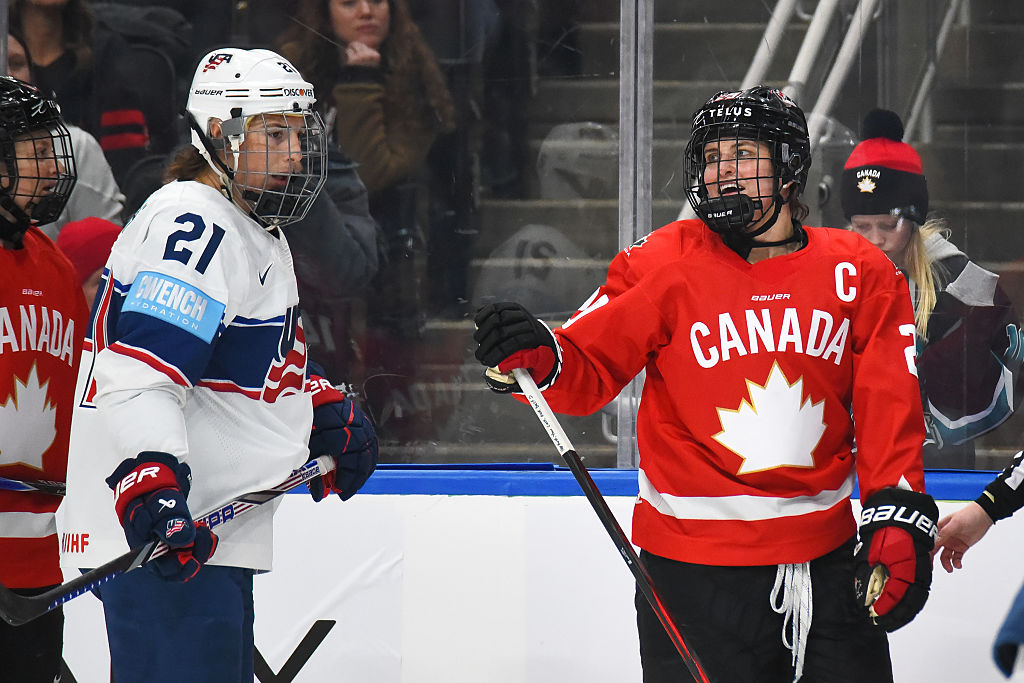
Women's Sports Stars and Storylines Headlining the Winter Olympics Schedule
From figure skating to ice hockey, here are the buzziest Olympic names and most compelling narratives playing out in Milan.
Mikaela Shiffrin (USA, Alpine Skiing)
The sport's undisputed GOAT enters the 2026 Games as the winningest alpine skier of all time. And after a dominant 2025 season, Mikaela Shiffrin has emerged as the gold-medal favorite in both the Slalom and Giant Slalom events. According to the Winter Olympics schedule, alpine skiing runs February 8th through the 22nd at Cortina's Tofane Alpine Skiing Centre. Tune in to see if she can add to her growing legacy as the most decorated skier in history.
Lindsey Vonn (USA, Alpine Skiing)
The most talked-about comeback in sports is finally hitting the Olympic stage. At 41, Lindsey Vonn has overcome the odds — and a partial knee replacement — to return to the slopes in winning fashion. To complicate matters, Vonn tore her ACL just last week, but the five-time Olympian says she'll still compete despite the injury. Regardless of her performance in Milan, her presence alone has already redefined perceptions of veteran athletes in high-impact sports.
Chloe Kim (USA, Snowboarding)
25-year-old Team USA favorite Chloe Kim is chasing a historic three-peat in the women's snowboard halfpipe. Already the first women's snowboarder to win back-to-back golds in the event, Kim remains the technical standard-bearer for the sport — though her performance in Milan might hinge on her health, as she continues to recover from a recent shoulder injury. The snowboarding competition runs February 8th through the 16th in Livigno.
Eileen Gu (China, Freestyle Skiing)
Following a triple-medal performance in Beijing, China's Eileen Gu returns to the Games as a global icon. With high marks in Halfpipe, Slopestyle, and Big Air, the 22-year-old remains one of the most versatile — and promising — threats on powder.
Amber Glenn (USA, Figure Skating)
Known for explosive athleticism, captivating storytelling, and a powerful triple Axel, Amber Glenn is a cornerstone of the US figure skating team. Becoming the first openly queer woman to win a senior US title after picking up gold at the 2026 US Championships, Glenn's journey to the 2026 Games makes for especially good TV and even better on-ice competition. Figure skating events take place February 7th through the 21st at Milano Ice Skating Arena.
Kaori Sakamoto (Japan, Figure Skating)
The reigning queen of consistency, Kaori Sakamoto is a widely expected contender in the women's figure skating field. Armed with immense speed and technical precision, the 25-year-old enters 2026 looking to add an elusive individual gold medal to her resume.
Women's Ice Hockey
Marking the first Winter Olympics of the PWHL era, expect rosters across the field to be deeper and more game-ready than ever before. Most storylines will undoubtedly revolve around Canada and Team USA's heated rivalry, led by longtime captains Hilary Knight (USA) and Marie-Philip Poulin (Canada).
But count on European powerhouses like Finland and Czechia to close the competitive gap thanks to the sport's overall professionalization. Women's ice hockey is set to take over the Winter Olympics schedule from February 5th through the 19th.
New Events Debuting at the 2026 Winter Games
The IOC introduced several new medal events this year, primarily in an effort to improve gender parity throughout the Games.
Ski Mountaineering (AKA Skimo)
A high-endurance sport that involves racing up mountains on skis using specialized skins for grip, covering steep terrain on foot, and cruising quickly through backcountry.
Women's Individual Large Hill (AKA Ski Jumping)
This February, women's sports athletes will additionally compete on the same high-altitude, long-distance jump hills as the men's event, moving beyond the traditional Normal Hill.
Women's Doubles Luge
This sled racing event features two women sharing a single sled, navigating an icy track at speeds exceeding 80 MPH.
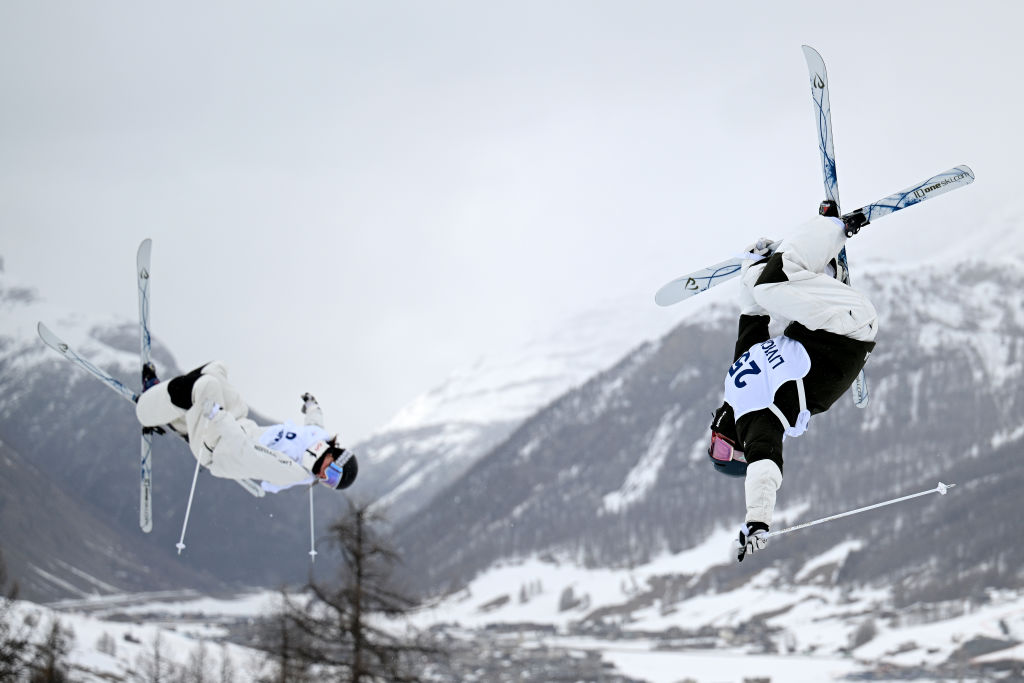
Freestyle Dual Moguls
This freestyle skiing event showcases two athletes racing side-by-side down a mogul-studded slope, picking up points for speed, technical turns, and aerial tricks in a head-to-head knockout format.
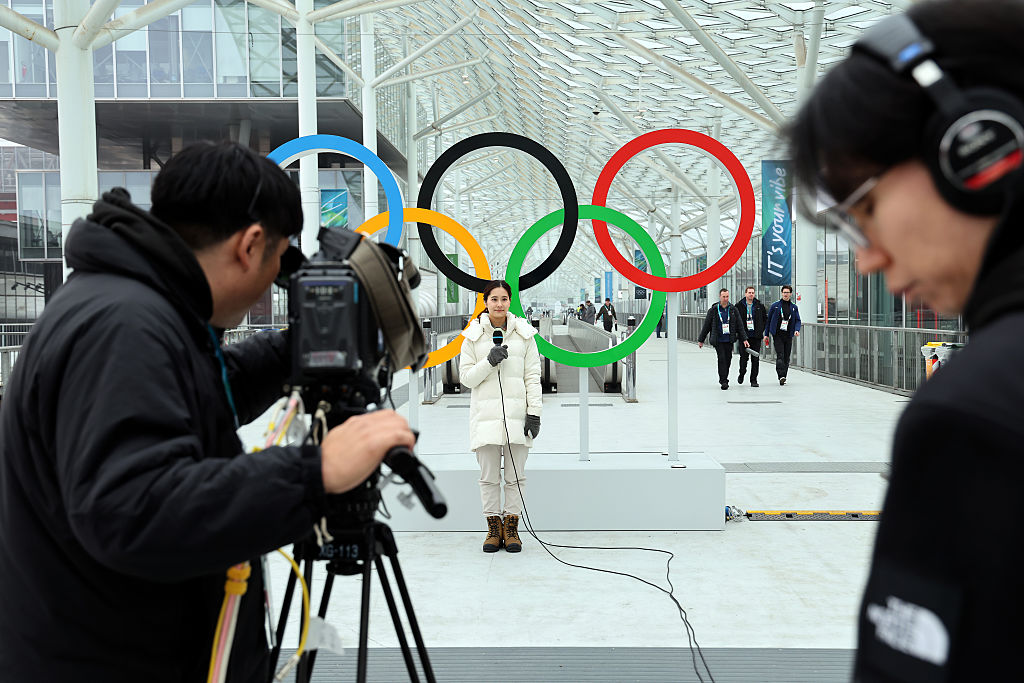
How to Watch the 2026 Winter Olympics in Milano-Cortina
NBC and Peacock have signed on as the exclusive broadcasters of the 2026 Winter Olympics.
Peacock will offer 24-hour livestreamed coverage of the complete Winter Olympics schedule, while NBC and USA Network subsequently handle primetime action as well as highlights.